
When Should an Alzheimer's Patient Go to a Nursing Home?
Few decisions weigh on a family more heavily than choosing when a loved one with Alzheimer's needs to leave home. The disease progresses in stages, and each stage brings changes that make daily life more difficult to manage, both for the person living with Alzheimer's and for the family trying to care for them.
Many families begin searching for a nursing home the moment things become hard. The truth is that a nursing home is only one of several options, and often not the right first step. Understanding when a nursing home is genuinely needed, and when another level of care is a better fit, can protect your loved one's quality of life and your family's peace of mind.
The Signs It May Be Time for More Care
Alzheimer's does not follow a strict timeline, but there are common signs that indicate care needs have outgrown what a family can safely provide at home. Watch for changes like:
- Frequent falls or difficulty with mobility
- Wandering, especially at night or into unsafe areas
- Trouble managing medications, or missed doses
- Inability to bathe, dress, or use the bathroom without help
- Confusion severe enough to put safety at risk (leaving the stove on, forgetting to eat)
- Aggression, anxiety, or behavioral changes that caregivers cannot safely manage
- Caregiver burnout, exhaustion, or health issues in the primary family caregiver
When several of these signs are present at once, home is often no longer the safest place. That does not automatically mean a nursing home. It means it is time to look carefully at what level of care your loved one actually needs.
If wandering is one of the concerns you are noticing, our post on When Wandering Becomes Dangerous: Signs Your Parent Needs Memory Care walks through the warning signs in more detail.
Nursing Home vs. Memory Care vs. Assisted Living: What's the Difference?
The words "nursing home" get used broadly, but they describe a specific level of care. Understanding the differences helps families avoid choosing more care, or less, than their loved one actually needs.
Assisted living supports seniors who need help with daily activities like bathing, dressing, medication reminders, and meals, but who do not require round-the-clock medical care. Many people with early-stage Alzheimer's do well in assisted living, especially in a small, supportive setting.
Memory care is a specialized form of assisted living designed specifically for people with Alzheimer's, dementia, and other forms of memory loss. Memory care communities offer secure environments, staff trained in dementia care, and daily routines built around the way memory loss affects a person's needs. This is often the right fit for the middle stages of Alzheimer's.
Nursing homes provide skilled nursing care around the clock. They are designed for people with serious medical conditions requiring frequent nursing intervention, not just help with daily tasks. For many people with Alzheimer's, a nursing home is more care than they need, and can feel more clinical than supportive.
For a deeper comparison, our post on What's the Difference Between Assisted Living Facilities and Nursing Homes covers this in more detail.
When a Nursing Home Really Is the Right Choice
A nursing home is the right level of care when your loved one needs ongoing medical services that only licensed nursing staff can provide. Situations that typically call for a nursing home include:
- A feeding tube or ventilator
- Complex wound care
- IV therapy or frequent injections
- Advanced-stage Alzheimer's with significant medical complications
- A combination of Alzheimer's and another serious medical condition requiring skilled nursing
If the primary need is safety, supervision, and support with daily living rather than medical intervention, memory care in a licensed assisted living community is often a better fit, and a warmer one.
Where Palm Cottages Fits
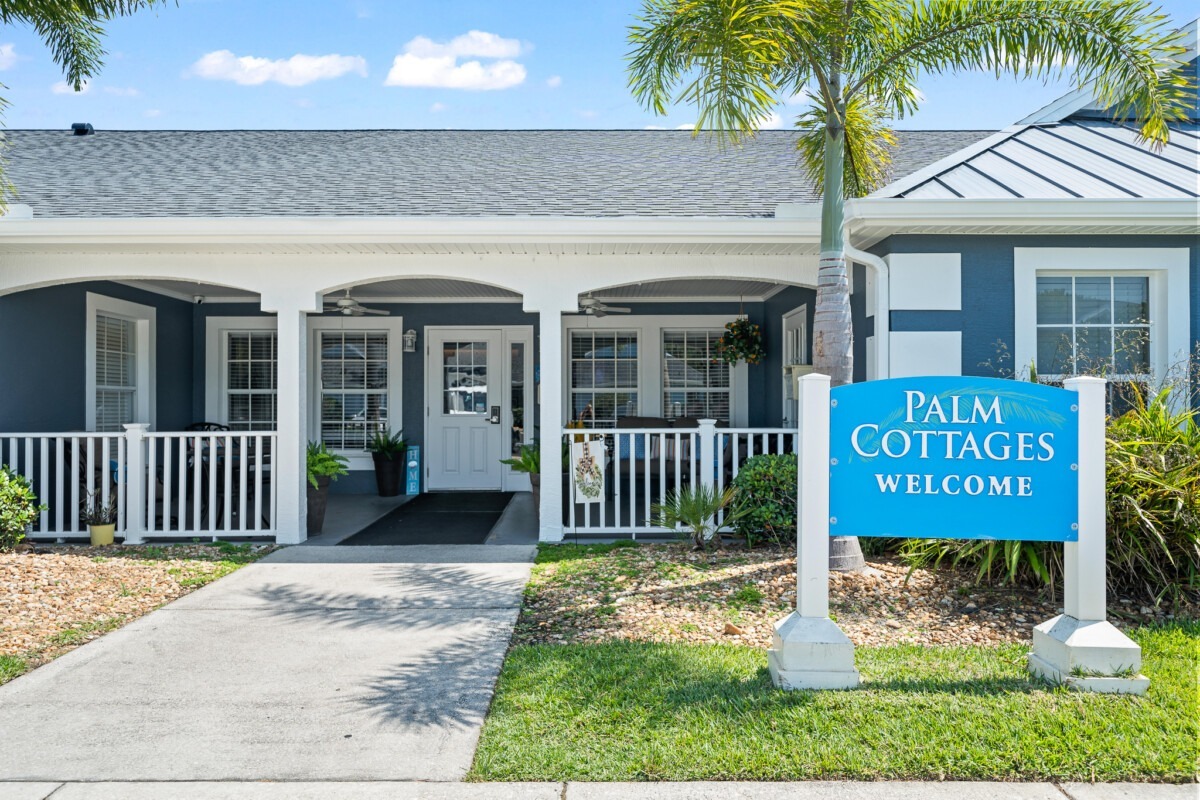
Palm Cottages is an assisted living and memory care community in Rockledge, Florida. We are also ECC licensed, which stands for Extended Congregate Care. In Florida, an ECC license allows an assisted living community to care for residents whose needs are higher than a standard assisted living facility can accommodate, without requiring the move to a nursing home.
That distinction matters. Families often assume a nursing home is the only option once their loved one's needs increase. In many cases, an ECC-licensed community like Palm Cottages can continue providing care in a homelike setting through stages of Alzheimer's that would otherwise require a nursing home transfer.
Our memory care neighborhood is designed specifically for residents living with Alzheimer's and dementia. The cottage-style setting, smaller community size, and specially trained staff let residents feel at home rather than institutionalized, while still receiving the level of care they need.
Starting the Conversation
If you are asking whether it is time for a nursing home, that question itself is a signal something needs to change. Sometimes the answer is a nursing home. More often, the answer is a memory care community, an ECC-licensed assisted living community, or a respite stay while your family figures out longer-term plans.
You do not have to navigate this alone. Our team is happy to talk through where your loved one is in their Alzheimer's journey and what level of care would truly serve them best. Schedule a tour to see our community in person, or contact us to speak with a member of our team.